

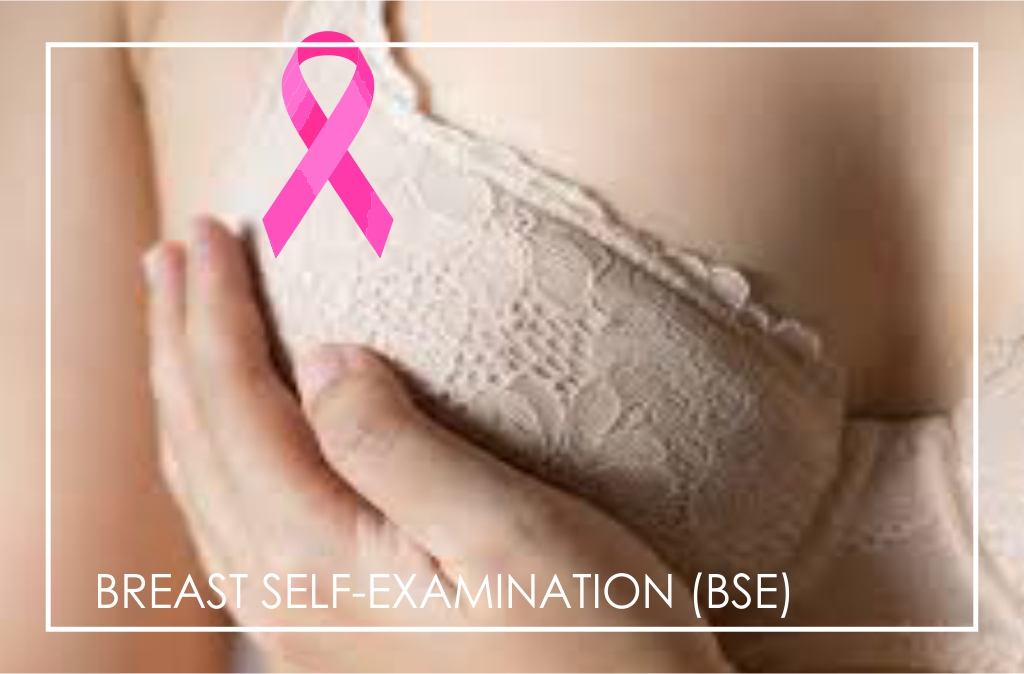
It is recommended that a Breast Self-Examination (BSE) is performed each month in addition to any mammograms or clinical (done by a doctor) breast examinations.
A Breast self-examination (BSE) cannot replace regular screening visits but helps to raise awareness of breast health. BSE is best done 2-3 days after menstruation ends when the breasts are least likely to be tender and hormone levels are relatively stable. If already menopausal a regular monthly date can be set for BSE.
Steps to Breast Self-Examination.
- In the privacy of your own room or bathroom strip down to the waist.
- Stand in front of a mirror where both breasts are visible at the same time.
- Stand with hands on your hips and look for any difference in contour, size, shape, colour, nipples and areola.
- Lift arms above the head and in that movement see whether both breasts move in the same way.
- Look out for any bumps, skin dimples or skin indentations in the breast tissue or nipple/areola area. (Using a cream or oil helps to make the next steps easier or do this in the shower with a little soap to help with glide.)
- Keeping the left arm raised, use the right-hand fingers to apply very gentle pressure to the left breast.
- Making use of a circular motion examine the breast moving from the nipple outward (A).
- Then examine moving from the outside of the breast to the nipple in a circular manner (B).
- Lastly stroke from the top to the bottom of the breast starting closest to the breastbone and then moving all the way to the armpit (C).
- Note any changes in texture, tenderness, lumps, skin, colour or size.
- Repeat the examination on the other breast and again for both breasts lying down.
- When lying down also stroke into the axilla and take note if any lumps or tenderness are present.
