Dr Ria Smit & RSG Radio: Jonk 15 January 2026
ENGLISH TRANSLATION BELOW:
Dr. Ria Smit talks with Martelize Brink about Zeolite.
1. What is zeolite?
Dr. Ria: Martelize, zeolites are a group of naturally occurring microporous minerals. The first zeolite was scientifically described in the 18th century and was given its name because, in Greek, it means ‘boiling stone.’ It appeared as though the stone were boiling when heated because it released water molecules that had been trapped within it.
Since then, several other zeolites have been discovered. They have a unique structure that is often compared to a honeycomb. The tiny channels and cavities allow certain substances to move into them, become trapped, and also adhere to their surface.
Zeolites have been used for decades in industries involving water filtration, environmental clean-up, and medical technologies and devices such as oxygen concentrators.
It is important to understand that only one zeolite is currently known to be safe for human consumption, namely clinoptilolite.
However, that is a difficult word, so, Martelize, in the context of our discussion, that is always the form being referred to whenever we talk about zeolite. It is not a vitamin, enzyme, or medication, but rather a mineral adsorbent.
________________________________________
2. How does zeolite work in the body?
Dr. Ria: When zeolite is taken orally, it remains exclusively within the gastrointestinal tract.
It is not absorbed through the intestinal wall and does not enter the bloodstream, cells, or organs. Any positive effects are therefore indirect.
Zeolite works by trapping certain substances when it comes into direct contact with them. Zeolite carries an overall negative charge and can physically attract and bind positively charged ions in close proximity. The zeolite, together with whatever is attached to it, then passes unchanged through the intestinal tract and is excreted in the stool.
This means that zeolite can only bind substances that are already present within the gastrointestinal tract and cannot remove systemic toxins from the body.
Zeolite has been shown to bind very strongly to ammonia and histamine. Ammonia is a harmful waste product produced by intestinal bacteria.
It also binds reasonably strongly to lead.
Weak to very weak binding may occur with cadmium and nickel, but also with elements that are necessary and even essential for humans, such as iron, copper, magnesium, zinc, and certain medications.
Claims that it binds to:
• Pesticides,
• Mycotoxins (fungal toxins),
• Chemical toxins remain hypothetical and have not yet been proven in human studies. These claims are based on laboratory or animal studies and are unfortunately often exaggerated in marketing.
Similarly, claims that zeolite can remove so-called “brain toxins” or systemic toxins from organs, or specifically extract mercury (Hg) from the body, are simply untrue and entirely unsupported because zeolite has no effect outside the gastrointestinal tract.
For the same reason, it cannot:
• Alkalinize the body’s pH,
• Cure diseases such as cancer or autism.
________________________________________
3. What are realistic expectations regarding potential benefits and possible disadvantages?
Dr. Ria: Zeolite is typically recommended as a course of treatment as part of a detox diet, usually lasting 2–3 weeks, although some courses may continue for several months. These courses are often repeated three to four times per year.
The goal of a detox diet and lifestyle—which is really a topic in its own right—is primarily to give the liver and kidneys a period of relative rest. By binding substances such as ammonia, histamine, and the other compounds mentioned earlier within the gastrointestinal tract, the burden on the liver and kidneys is reduced. These organs would otherwise have to process and eliminate these substances themselves, allowing them an opportunity to rest and recover for optimal function.
Because we still do not have long-term data regarding the effect of zeolite on the absorption of nutrients and minerals required by the body, it is not recommended from a medical perspective to use zeolite continuously on a daily basis.
There is, however, a small group of individuals who appear to have histamine intolerance, and some may experience relief of their symptoms when using zeolite. For these individuals, the potential benefits of long-term use may outweigh the risks, and this is certainly an area where use and monitoring together with a doctor appears promising.
Martelize, anyone taking chronic medication should make absolutely certain that it can safely be used together with zeolite, even for short-term detoxification.
In particular, thyroid medication and some antibiotics are highly sensitive to interference from zeolite. The same applies to certain cardiovascular medications, including those used for blood pressure control, blood thinners, diabetic medications, and psychiatric medications.
For most medications, however, safe zeolite dosing schedules can usually be developed.
Pregnant women, children, individuals undergoing cancer treatment, and people receiving immunotherapy should preferably avoid zeolite entirely.
The greatest safety risk, however, lies in poor-quality or contaminated supplement products.
________________________________________
4. Is there enough good research?
Dr. Ria: Yes, Martelize, there is good research regarding clinoptilolite confirming that it appears to be safe for use by healthy adults.
Unfortunately, there are still relatively few high-quality, large-scale human clinical studies.
Most of the available studies have evaluated use for periods of up to four weeks.
In my searches, I could find only six studies that investigated use for longer than three months, and none that extended beyond six months.
As a result, there are currently no international guidelines or medically approved indications supporting the routine use of zeolite as a health supplement.
________________________________________
5. What is meant by “levels” and heavy metal poisoning?
Dr. Ria: Heavy metal levels, such as those of lead, mercury, cadmium, and arsenic, can be medically measured using blood and urine tests.
True heavy metal poisoning is treated with chelation therapy. Specific medications are available that can enter the bloodstream, cells, and organs and, in simple terms, act like a magnet to remove the metal from the body.
Zeolite is not a chelating agent and cannot remove heavy metals from the blood or tissues, specifically because, as mentioned earlier, it cannot leave the gastrointestinal tract.
Therefore, it is not a recognized treatment for mercury or lead poisoning.
Zeolite levels can be monitored in stool samples for research purposes, but such testing is not commercially available to the general public.
________________________________________
6. How do I know whether I am using a good-quality zeolite product?
Dr. Ria: That is difficult, Martelize, because zeolite unfortunately falls within a largely unregulated market where it is easy to profit from well-intentioned individuals who simply want to improve their health.
The responsibility therefore falls largely on the consumer to do the necessary research.
I hope the following points may help:
A reliable product should specifically state that it contains clinoptilolite, and generally, the closer the percentage is to 100%, the better.
The company should be able to provide a valid Certificate of Analysis (CoA) demonstrating that the product is safe, pure, and free from heavy metal contamination.
The product should have a known origin. While this is not an absolute rule, zeolite sourced from Europe is generally subject to stricter mining and manufacturing regulations.
Powdered forms are generally reported to be safer than highly refined nano- or micronized forms.
As already mentioned, any claims of direct effects within the bloodstream, organs, or cells are unfounded.
Liquid forms have not demonstrated any proven advantage over powdered forms based on the literature I was able to find.
English marketing terms such as
• Bio-activated,
• Electrically charged,
• Chemically modified, is purely marketing language and does not confer any proven benefit.
________________________________________
In summary:
Any product making exaggerated detoxification or healing claims, while being unwilling to disclose the source or evidence for those claims, should preferably be avoided.”
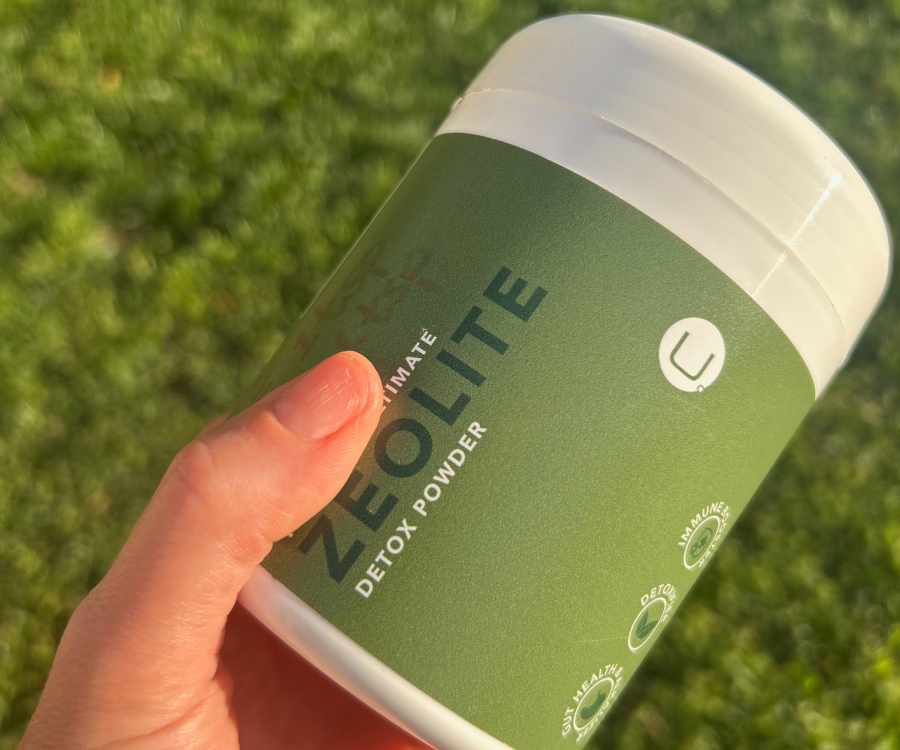
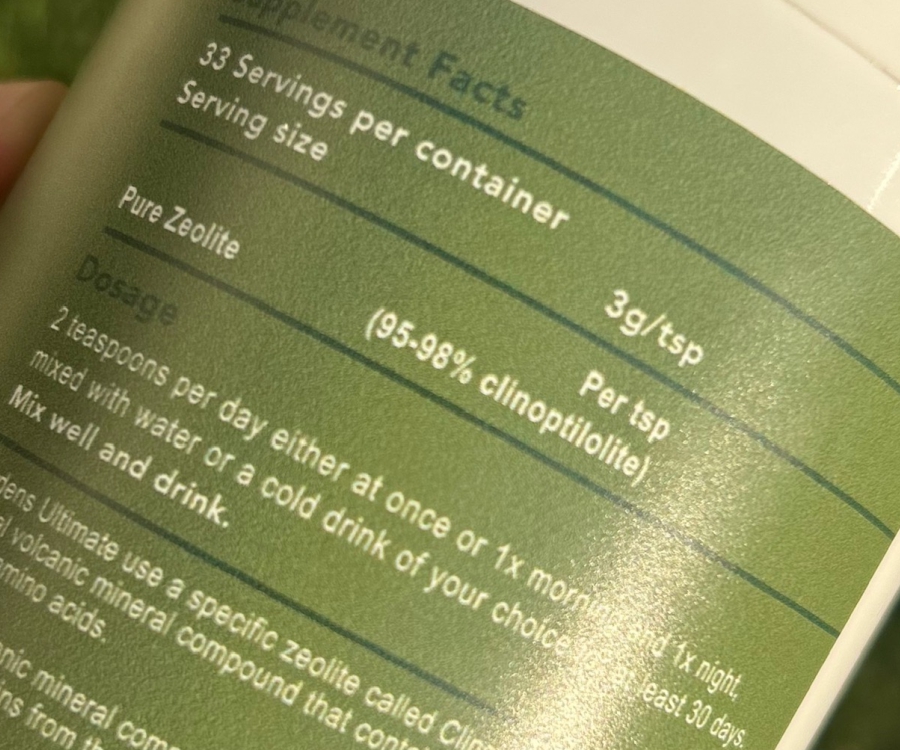
Nordens Ultimate Zeolite supplement, dosage & usage
Ultimate Zeolite Detox Powder Product