


What should you know about prescription medications for acne?
THERE ARE 3 BROAD GROUPS OF PRESCRIPTION MEDICATIONS AVAILABLE FOR THE TREATMENT OF ACNE.
1
RETINOIDS
RETINOIDS
Retinoids requiring a prescription are significantly more potent than those found over the counter.
- They should form part of just about all acne treatment plans.
- Not to be used at the same time as benzoyl peroxide – use Benzoyl peroxide in the morning and retinoid at night.
WHY DO RETINOIDS WORK?
Retinoids help to normalize the formation of the top layer of skin – this, in turn, leads to:
- Increased exfoliation.
- Decreased clogging of pores.
- Less pimples and comedones.
- Less Inflammation.
- Less hyperpigmentation.
- It helps to enhance the penetration of other products into the skin.
TOPICAL RETINOIDS
Topical retinoid products are applied to the skin in the form of a gel, cream or a peel.
- A Retinol Peel is available as a professional product applied once every 6-8 weeks at a doctor’s office.
- Apply retinoid cream at night.
- Use pea size amount of cream for the whole face.
- Apply to clean dry skin.
- Irritation may be reduced by waiting 20 min after face wash.
- Start with low dose cream and gradually increase strength.
- Side Effects include skin dryness, flaking and sun sensitivity which usually resolves after few weeks of treatment.
- Should not be used in pregnancy and breastfeeding.
ORAL /SYSTEMIC RETINOIDS
Oral /System retinoids are taken as a pill or a capsule.
- The retinoid is in the form of isotretinoin also known as Roaccutane, Accutane or Orotane.
- In addition to the above list – It works by reducing the oily production in the skin and shrinking the oily gland.
- Should preferably be used in the few selected cases where severe nodular and or cystic acne is present and the normal treatment of antibiotics, topical retinoids and/or hormonal treatments have failed.
- This medication WILL seriously harm an unborn baby if taken during pregnancy.
- Women have to comply with precautions in terms of birth control or agree to abstinence during course of treatment.
- One month after stopping the treatment no further risk exists for falling pregnant.
- This medication may cause liver abnormalities and abnormal cholesterol (triglycerides) levels – therefore monthly blood tests are required.
- It causes dryness of the mouth, lips, nose, eyes, and skin, which usually improves within few weeks of being on the treatment.
- A treatment course usually lasts 16-20 weeks.
- A Treatment course may put acne into remission.
2
ANTIBIOTICS
ANTIBIOTICS
Best used with Benzoyl Peroxide as it lowers chance of bacterial resistance.
• Effectiveness of the antibiotics is increased when used with benzoyl peroxide and/or retinoids.
• Should never be used alone as a treatment for acne due to possible bacterial resistance.
HOW DO ANTIBIOTICS WORK?
Antibiotics work by killing the bacteria that contributes to acne forming.
TOPICAL ANTIBIOTICS
This means the antibiotic is applied to the skin in the form of creams, lotions or gels.
- Clindamycin and erythromycin mostly used.
- To be applied twice a day usually.
SYSTEMIC ANTIBIOTICS
Systematic Antibiotics are taken as a pill or a capsule.
- Ideally used 3-4 months WITH retinoid product.
- May be prescribed as pulses – for example, few days out of week or 1-2 weeks out of month.
- May repeat course of 3-4 months after break of few months.
- Usually higher doses for the first month of treatment and then decreased to lower maintenance dose.
- Thrush and gastrointestinal side effects are most common with antibiotic use.
3
HORMONAL TREATMENTS
HORMONAL TREATMENTS
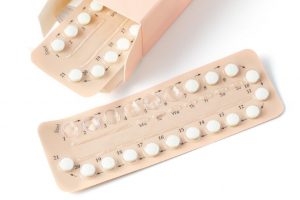
These work by decreasing the effects of testosterone /androgen on the skin and leveling out hormonal fluctuations.
- Combined Oral Contraceptives and Spironolactonens.
- They are usually tolerated very well and side effects are mild.
- They should not be used when there is a very strong family history of strokes, deep vein thrombosis or heart attacks.
- They should be used with caution in smokers.
- Best results usually with the use of Retinoids also.
