


What is aesthetic threading?
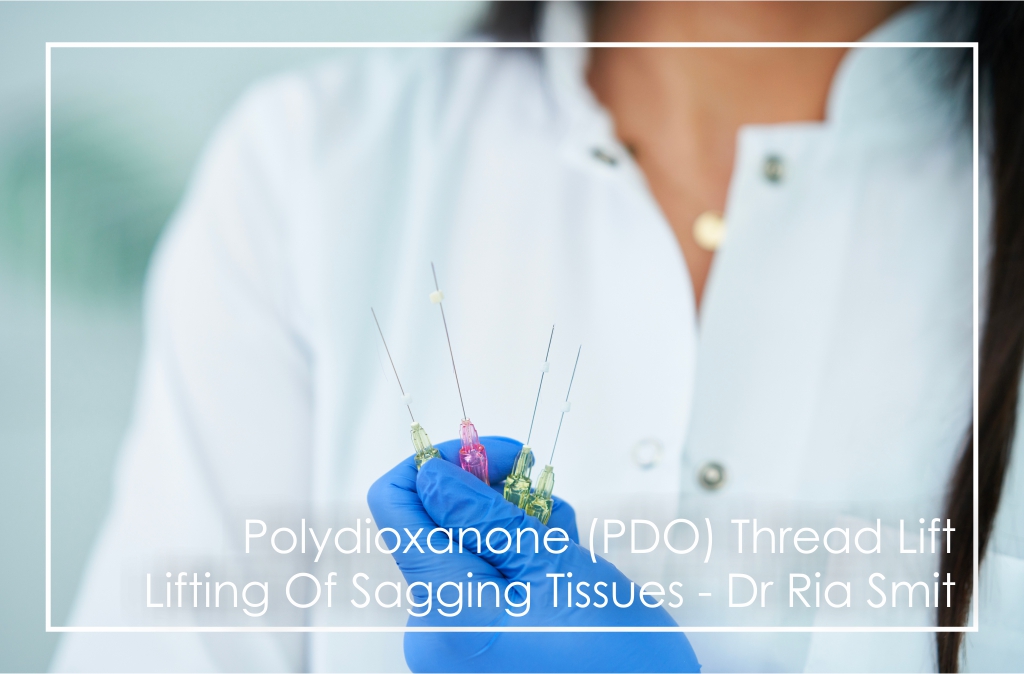
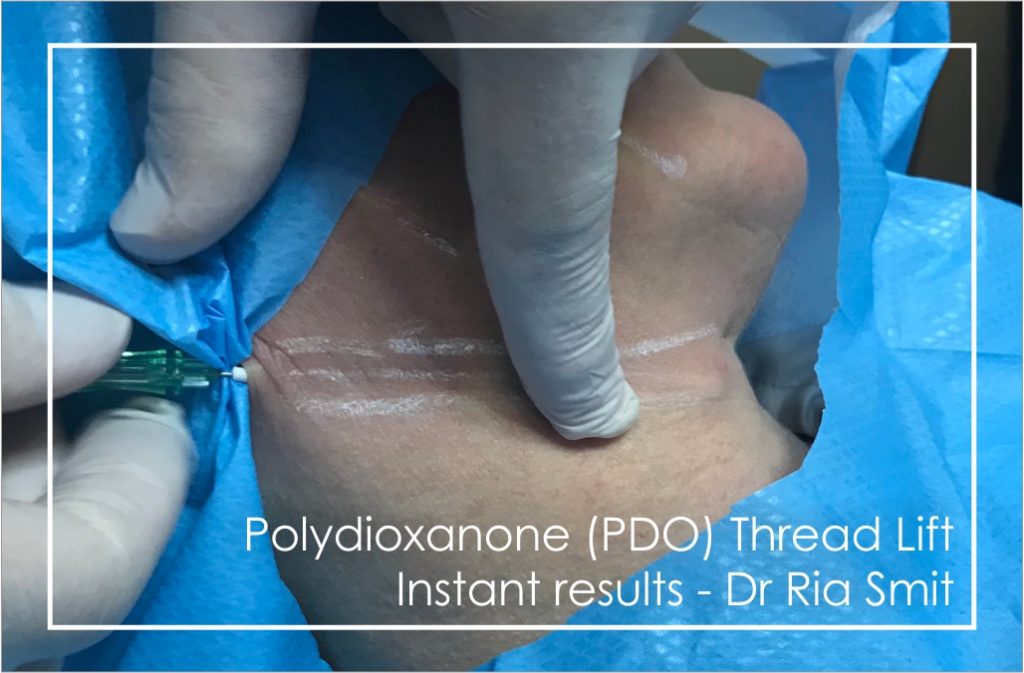

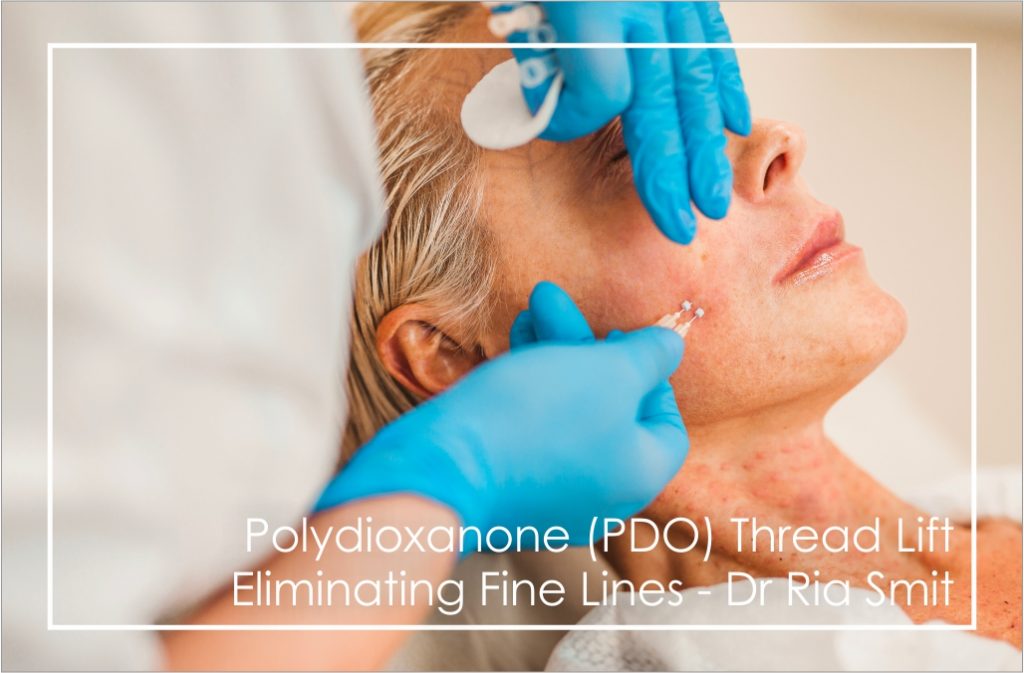
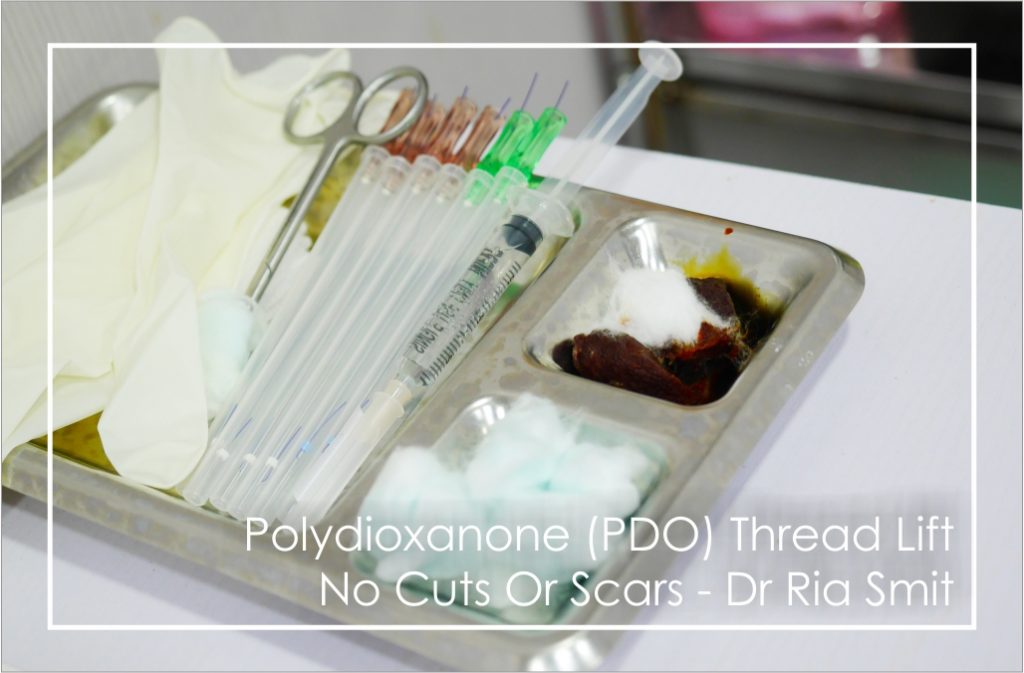
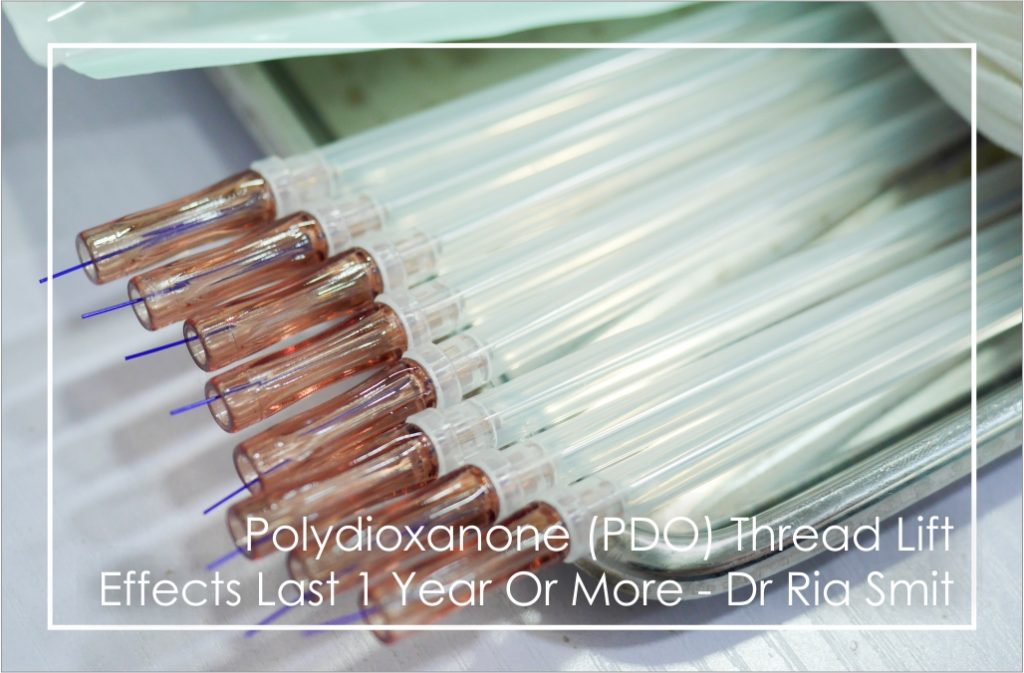
Sterile, medical suture material are placed underneath the skin using a needle to introduce them.
These sutures are able to rejuvenate, tighten and lift skin depending on the type of suture used. The procedure placing these threads is done at the practice. A local anesthetic is always used and maintaining a sterile environment during the procedure is essential.
PDO STANDS FOR POLYDIOXANONE.
It is a material that has been used in plastic surgery, general surgery, urology, gynaecology and other medical disciplines as suture material for more than 30 years.
It is a strong monofilament fibre which dissolve in human tissue through the process of hydrolysis.
This basically means that when it encounters water in the body it binds to it and slowly disintegrates into water molecules and carbon dioxide molecules. Carbon dioxide is excreted through the lungs by breathing and the water molecules is either used again by the body or removed through the kidneys.
Before the process of hydrolysis starts, however, the PDO thread is able to stimulate the surrounding tissues to form collagen as well as release and produce other growth factors. This brings about the significant anti-aging effects of the PDO thread in combination with the physical lifting ability of the thread.
Polylactic Acid (PLA) and Polycaprolactone (PCA) threads are also used. They work on the similar principles, however definite differences exists between the thread options. The specific threads to be used during your procedure is better discussed during consultation.
– POLY DIOXANONE –
3 BROAD CATEGORIES OF THREADS ARE AVAILABLE.
- Single threads to bring about collagen stimulation.
- Screws for minimal lifting and collagen stimulation.
- Lifting threads mainly used to physically lift sagging areas in the face and body.
POTENTIAL BENEFITS OF PDO THREADS:
- Resolution of fine wrinkles.
- Eliminates fine lines.
- Smooths deep lines.
- Improves skin colour, texture and tightening of pores.
- Lifting effects on sagging tissues.
Compared to Surgical face lift:
• Relatively safe.
• Relatively quick: 30-60 min.
• Relatively short recovery period – 2-3 weeks compared to 6 (or 8) for face lift.
• Instant results although recovery time is required.
• No cuts or scars.
• Effect may last one year or more.
• Thread is completely absorbed after few months.
• Little side effects.
SIDE EFFECTS & COMPLICATIONS OF PDO THREADS:
All of these are to be expected and resolve within 2-4 weeks after the procedure.
• Bruising, including delayed bruising
• Swelling
• Redness
• Tenderness
• Transient rippling or dimple formation, slight asymmetry, redness and/or visible thread some or all of which may require additional treatment.
• Discomfort may be experienced 2-3 weeks after treatment.
• Lumpiness: Inflammatory papules or “lines” particularly in areas with thin skin or mobile areas ie. Around the mouth, neck, and eyes. This may take several days to weeks to recover depending on individual healing time.
• Bacterial Infection: This is very unlikely to happen, however, if you feel this may be happening in the treated area after the procedure you should notify doctor as soon as possible. In such a case an antibiotic prescription may be necessary. Any infection could last 7-10 days and could lead to scarring.
• Post-inflammatory hyperpigmentation (darker skin). More of a risk with skin types Fitzpatrick IV – VI.
• Puncture site scarring.
• Bleeding episode during or after the treatment. Should post-operative bleeding occur, it may require further treatment to drain the accumulated blood (haematoma).
• Ongoing discomfort.
• Allergic reactions.
• Risks linked to local anesthesia.
- Damage to deeper structures: Deeper structures such as nerves, blood vessels and muscles may be damaged during the course of the treatment. The potential for this to occur varies according to the location on the body where the treatment is being performed. Injury to deeper structures may be temporary or permanent.
- Failure to Achieve Desired Results: It is possible that this procedure may fail to achieve your desired results. Strict adherence to the pre-op and post-op instructions is essential.
Precautions & Contraindications
• Suspicious Skin Lesions: These must be reviewed by a doctor prior to beginning treatment.
• Not to be treated if open wounds are present in the treatment area.
• Allergy or previous anaphylaxis to local anaesthetic or any of the ingredients to be used.
• Avoid Chemical Peel, Laser Hair Removal, Depilatory Creams/Waxing, Electrolysis, Micro needling in the week prior to treatment.
• Sun exposure, tanning beds for 2 weeks prior to treatment.
• Prone to forming scar tissue especially keloid scars.
• Acute infections: Systemic or in the site of planned treatment.
• Inflammatory skin or systemic conditions.
• Bleeding tendency.
• Medications that cause increased tendency to bleed.
